Wire Harness Testing for Defence Systems | Cimbian UK

Wire Harness Testing for Defence Systems | Cimbian UK

Ensuring Zero-Failure Reliability: The Critical Role of Wire Harness Testing for Defence Systems

In the defence and aerospace sectors, there is no room for “good enough.” Whether it is an unmanned aerial vehicle (UAV), a naval imaging system, or a ground-based tactical network, the integrity of every wire and connection is mission-critical. A single faulty harness can lead to more than just system downtime—it can compromise operational safety and mission success.

A recent feature in ASSEMBLY Magazine titled “Testing Wire Harnesses for Defense Systems” highlights how top-tier defence contractors, such as PVP Advanced EO Systems, are tackling these challenges by moving away from manual testing towards sophisticated, automated solutions.

The Complexity of Modern Defence Harnesses

Modern defence electronics are undergoing a shift towards unprecedented density and miniaturisation. As the ASSEMBLY article illustrates, the sheer volume of connection points within advanced electro-optical and infrared sensors makes traditional manual continuity checks practically obsolete. What was once a manageable task has become a significant bottleneck that is both labour-intensive and highly susceptible to human error.

The industry is responding to this challenge by integrating sophisticated automated testing platforms into the heart of the production floor. These systems are designed to:

  • Instantly Identify Complex Faults: Rather than checking one pin at a time, automated testers scan thousands of points in seconds, pinpointing opens, shorts, and miswires with digital precision.

  • Measure Precision Resistance: By employing 4-wire Kelvin measurements, these systems can detect minute variations in resistance. This is essential for ensuring that solder joints and crimps meet stringent milliohm-level specifications—defects that a standard multimeter would simply overlook.

  • Establish Full Traceability: In a sector governed by strict compliance, every test result matters. Modern systems generate comprehensive, wire-by-wire reports that can be linked via barcode to specific serial numbers. This creates a permanent digital “birth certificate” for every assembly, providing the transparent audit trail required by prime contractors and MoD auditors alike.
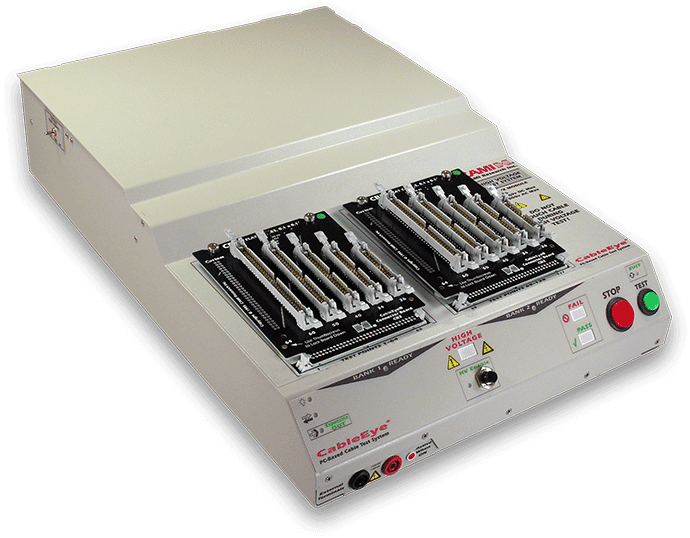
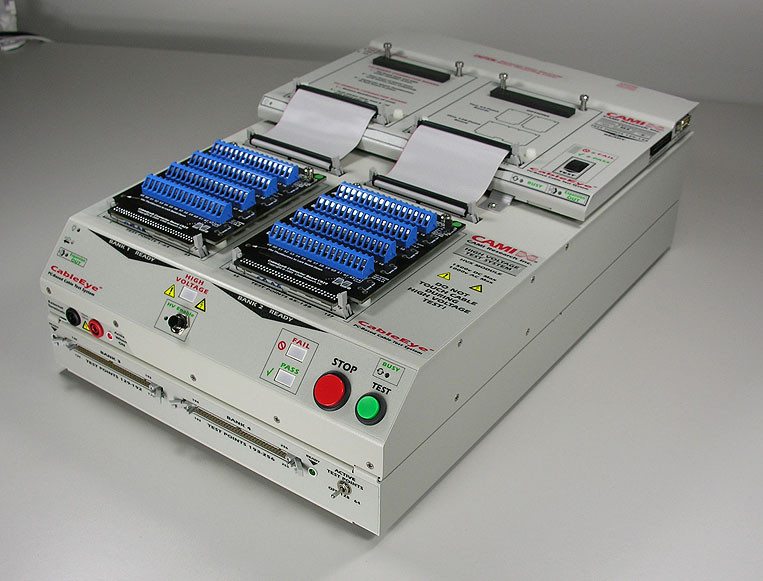
picture of hipot hvx tester
cableeye hvx hipot tester

Moving Beyond Simple Continuity: The Standard for High-Reliability

A fundamental takeaway from the ASSEMBLY feature is that basic “pass/fail” continuity testing is no longer sufficient for modern mission-critical hardware. While a simple beep might confirm a connection exists, it fails to reveal the quality or longevity of that connection under duress.

For ruggedised defence applications, testing must delve deeper into the electrical integrity of the assembly. Measuring dielectric breakdown and insulation resistance (often referred to as Hipot testing) is vital for identifying potential failures that only manifest when a system is under load. Furthermore, checking capacitance of twisted-pairs ensures that signal integrity remains uncompromised—a crucial factor for the high-speed data transfer required by modern imaging and communication systems. These rigorous checks guarantee that wire harnesses can survive the extreme vibrations, vacuum conditions, and thermal stresses typical of military and aerospace environments.

To manage this technical complexity without sacrificing throughput, many manufacturers are now adopting “learning” modes. By using a known-good “golden” harness, the testing system can automatically detect and store the correct wiring map, resistance values, and specifications. This transition from manual programming to automated detection significantly reduces setup times and eliminates the risk of human error during the configuration phase. The result is a more agile production line and a robust quality control process that provides the precision required for defence-grade certification.
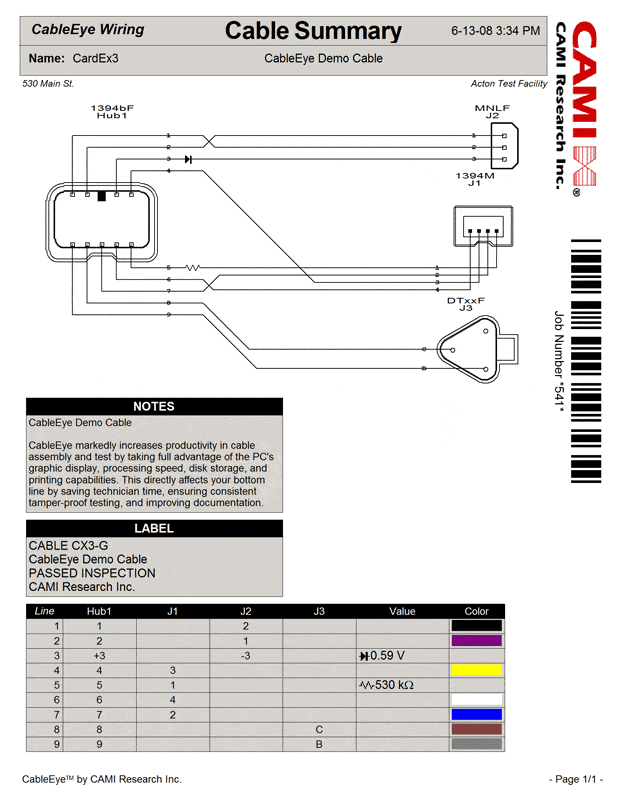
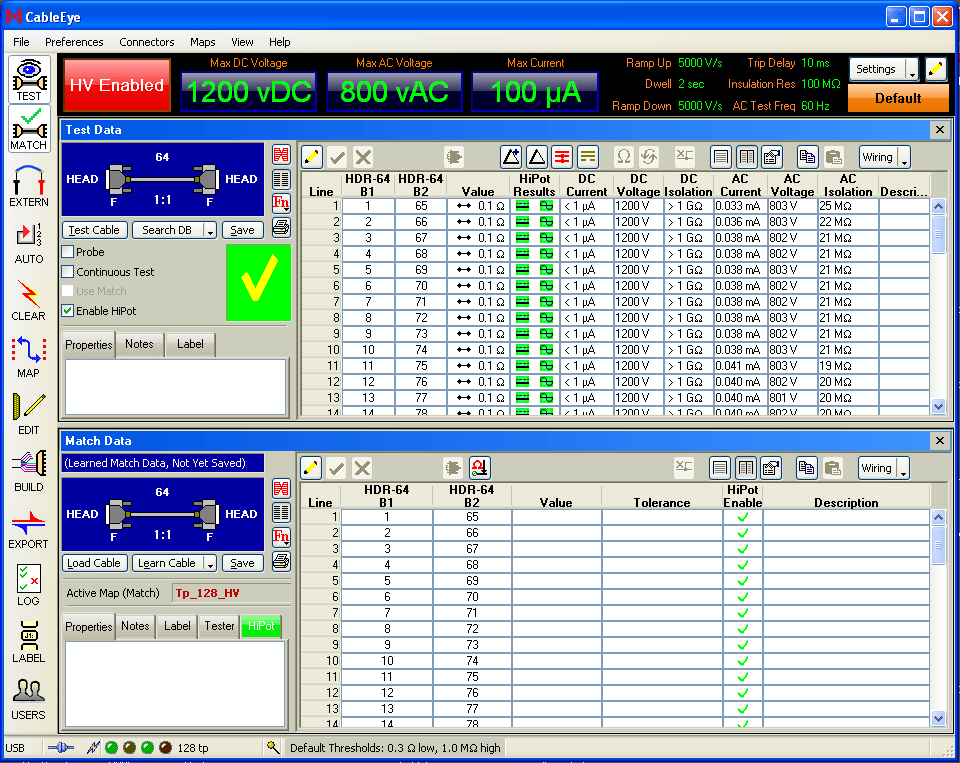
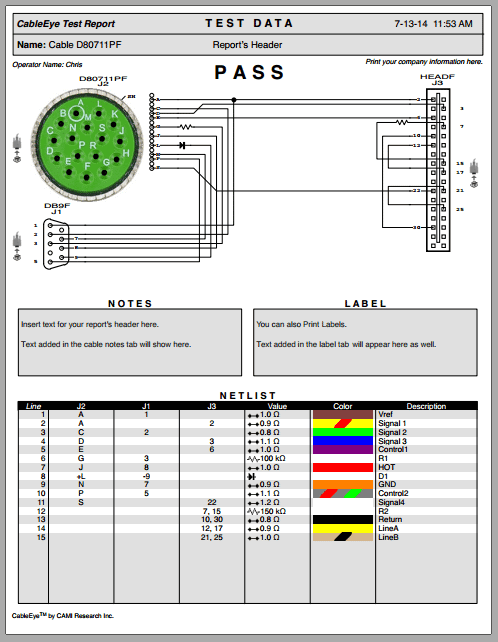
reporting - sample report 01

Cimbian: Your Partner in Defence-Grade Testing

At Cimbian, we recognise that the standards set for the defence industry are the benchmark for all high-reliability manufacturing. Our range of cable testing equipment is designed to meet these exact needs.

From prototyping and assembly to post-deployment diagnostics, we provide the tools necessary to ensure your wiring harnesses are “mission-ready.” Much like the systems discussed in the ASSEMBLY feature, our solutions prioritise automation, precision, and ease of use, allowing you to eliminate the testing bottleneck without sacrificing quality.

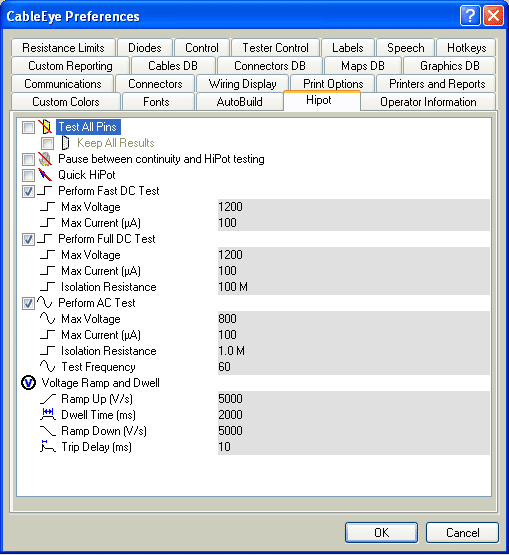
screenshot of hipot test settings from cableeye hvx
hi-pot testing - control panel
motorsport harnesses - hvx printed test report with insulation withstand testing

Read the original full article on ASSEMBLY Magazine: Testing Wire Harnesses for Defense Systems.

Cimbian: Excellence in Cable & Harness Testing

Based in the UK, Cimbian specialises in delivering precision-engineered testing and manufacturing systems for mission-critical applications. We understand that in the defence sector, “failure” is not an option. By providing state-of-the-art automated testing solutions, we help UK manufacturers improve throughput, eliminate human error, and achieve full traceability for complex harness assemblies. Discover our full range of solutions at cimbian.co.uk.

If you found this page interesting please share it with your friends and colleagues.

Ensuring Cable Safety with Insulation Withstand Testing: Why Precision Matters

Ensuring Cable Safety with Insulation Withstand Testing: Why Precision Matters

Ensuring Cable Safety with Insulation Withstand Testing: Why Precision Matters

When it comes to cable assemblies, safety and reliability are non-negotiable. One of the most critical tests performed to ensure these qualities is the Insulation Withstand Test, also known as Dielectric Breakdown Testing, high-voltage withstand testing, or Isolation Testing. This high-voltage test verifies that the insulation within a cable assembly can withstand a specified voltage without allowing excessive current to flow, confirming that the product is safe for use in the field… or is it?

What is an Insulation Withstand Voltage Test?

Typically conducted during end-of-line testing, this process involves applying a known high voltage and monitoring the resulting current. If the current remains below a preset threshold, the assembly passes the test; however, not all test systems are created equal—and that’s where the CableEye® HVX Series stands out.

picture of hipot hvx tester
cableeye hvx hipot tester

Going Beyond the Basics with CableEye®

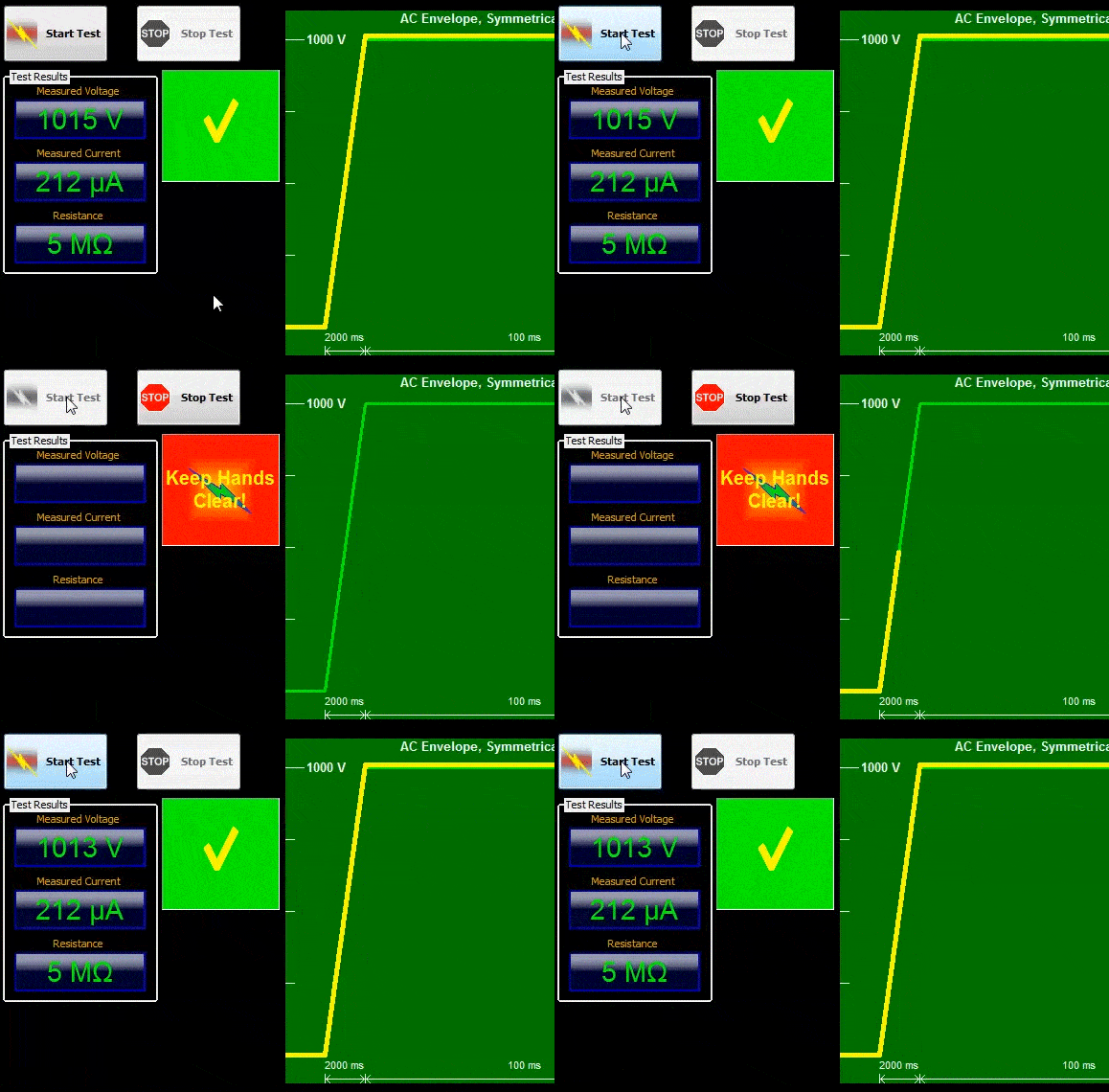
While many HiPot testers can perform a basic insulation withstand test, the CableEye HVX Series offers advanced features that ensure a more accurate, repeatable, and reliable result. For instance, when high voltage is applied to a cable, the inherent capacitance can cause the power supply to trip prematurely. To counter this, CableEye allows users to precisely program both the voltage ramp-up and ramp-down rates in 1V increments. This fine control enables the system to accommodate the charging characteristics of the cable under test, ensuring the full test voltage is applied without triggering a fault.

cableeye hvx hipot rise-time screenshot

Intelligent Current Monitoring

Another key advantage of the CableEye system is its programmable current range, from 0.05mA to 1.5mA. This ensures that the assembly is protected throughout the test, including during ramp-up and ramp-down phases. The system continuously monitors current levels, preventing damage while maintaining test integrity.

Additionally, CableEye allows for a programmable trip current—a brief allowance for over-current conditions caused by voltage ringing when the maximum test voltage is reached. This feature ensures that minor, short-lived current spikes don’t result in a failed test or reduced voltage application.

Confidence in Every Test

Once the maximum voltage is applied and stabilised, the system enters a programmable dwell time, during which the high voltage is maintained before ramping down. This ensures the insulation is tested under sustained stress, providing a more thorough validation.

All of these programmable parameters—ramp rates, current limits, trip thresholds, and dwell times—combine to deliver a test that is not only precise but also repeatable and trustworthy. With CableEye, manufacturers can ship their cable assemblies with full confidence that the test specifications were met—not compromised.

screenshot of hipot test settings from cableeye hvx
hi-pot testing - control panel
motorsport harnesses - hvx printed test report with insulation withstand testing

More than just HiPot

The CableEye® HVX series of testers are based upon the well-established low voltage M3Z and M4 CableEye® testers from CAMI Research. What this means is that all products are tested for the low-voltage parameters including Continuity, Resistance, Diodes. Only after the assembly under test passes these tests will the CableEye® HVX system enter HiPot test mode.

A single test station for a one-stop test solution.

A well-considered investment

By investing in precision tools for insulation withstand testing, companies signal a clear commitment to excellence. It’s not merely about passing a test; it’s about protecting your brand, your clients, and ultimately, the end-users who depend on your products every day. In this context, precision isn’t just important—it’s indispensable.

Not All Cable Testers Are the Same

In a world where product safety and compliance are paramount, having the right tools makes all the difference. The CableEye® HVX Series doesn’t just perform insulation withstand testing—it elevates it, ensuring your assemblies meet the highest standards of quality, safety, and reliability.

If you found this page interesting please share it with your friends and colleagues.
Use your Cirris adaptor boards on your new CableEye

Use your Cirris adaptor boards on your new CableEye

We are often asked to replace old (or not so old in some cases) Cirris cable testers with our CableEye system, often due to improved flexibility through the Windows PC control that it has.

One stumbling block is the number of interface adaptors that have been produced by the customer over the years; clearly not something they would like to do again.

What is needed is a Cirris converter…

CAMI Research has developed the CB34 Cirris converter board-set; a direct interface replacement that means it is normally a plug-and-go operation to reuse the old interface adaptors but with the benefit of using an up-to-date, PC-controlled system that self-learns cables, provides easy reports, data logs to a network and remote use of the data via internet… a true 21st century Windows application.

The CB34 (Item #764 – Set of two boards) will accept one 64-point Cirris Adapter board or two 32-point Cirris adapter boards, and show results as a 64-pin header numbered 1-64 on each bank.

cb34 cirris converter

The CableEye software does not compute the board or cable signature or automatically identify which Cirris board is connected but it is a simple and quick task to use the PinMap software (Item #708), to obtain a proper graphic and pin numbering.

Most Cirris-made boards are numbered so that the test point number corresponds with the connector’s pin number, so the pin numbering shown on the 64-pin header will be correct even if the graphic is not.

You may use the CB34 Cirris converter with CableEye HVX systems. It has been certified to operate at test voltages of up to 1500vDC and 1000vAC, assuming that a suitably-rated Cirris board is also used.

It is now a simple and low-cost option for you to get a new, modern and very fast cable tester without the worry of losing your investment in all those adaptors. Drop us a line and we’ll do the rest.

If you found this page interesting please share it with your friends and colleagues.
Kevlar braid is no problem for our brushing machines

Kevlar braid is no problem for our brushing machines

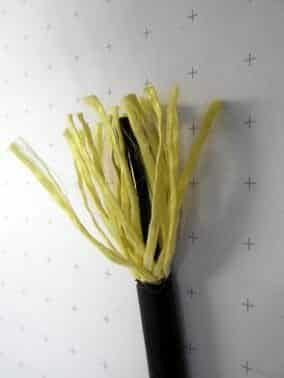
Kevlar braid – A first for us!

Another Boewe cable brushing machine ordered but this is for one very special application. A Kevlar braid cable that hangs out of the back of a helicopter!

This process generally takes upwards of TWENTY hours per cable end when done manually. The unbraiding must be done to a very high standard as its purpose is to support a large mass from the back of a helicopter in flight and its associated drag.

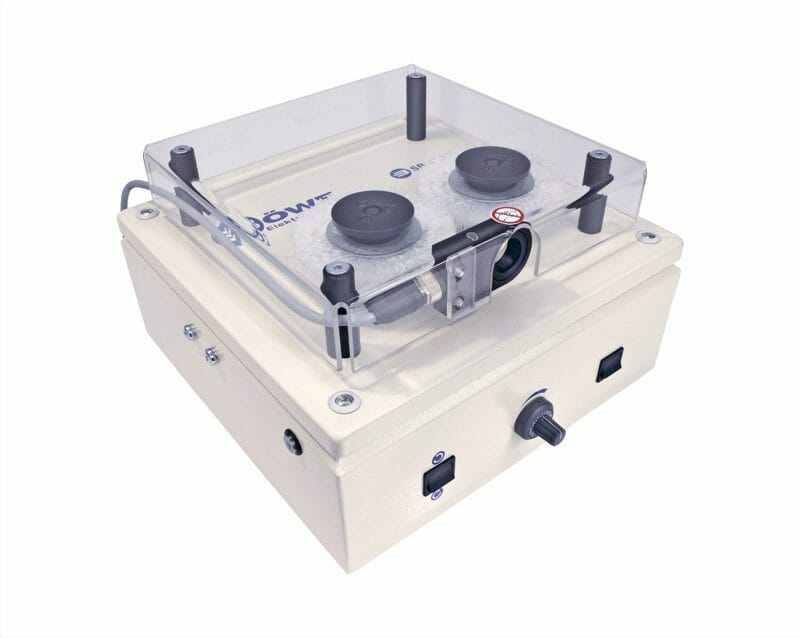
bsb 1005b with autostart sensor used for kevlar braid

Bsb 1005B With Autostart Sensor

Switching across to using the BSB1005 we were able to reduce this time to the point where ≈ 95% of the work was done in 25 five minutes!

kevlar braid - before

Kevlar Braid – Before

kevlar braid - after

Kevlar Braid – After

Boewe Elektrik constructed a special support plate but the brushes are standard, as is the rest of the machine.

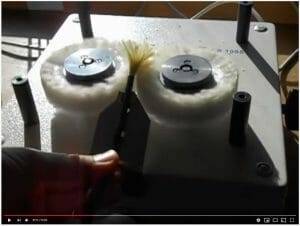
You can see this in action in our YouTube video here:

kevlar brushing

And you can learn more about the BSB1005 braid brushing machine by clicking here.

Consultative test services

Consultative test services help to understand and control costs.

Most people in our industry know the cost of manufacturing their product but, likewise, most do not fully calculate the cost of test, especially in development and our consultative test services can help.

Cimbian has over thirty years of experience in delivering cost-effective, flexible test solutions across a wide range of applications.

Services available from Cimbian include:

– Test solution development

– Test system integration

– Servicing, calibration and repair Cable testing service

Get in touch with us and we’ll guide you through the process.

Braided cable processing

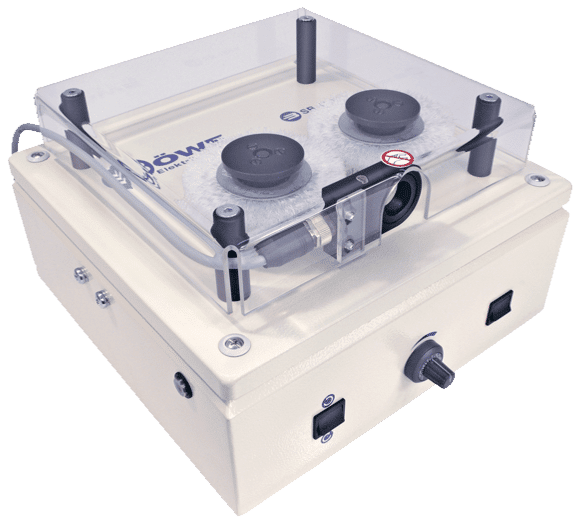
Cimbian UK, ever innovative have brought a brand new range of Braided cable processing machines for the wire and cable industry.

Designed for de-merging (de-weaving) braided shields from cables these machines take a time-consuming task and turn it into a fast, efficient and less damaging process.

Designed and made in Germany they are of extremely high quality and, of course, fully CE compliant.

Details of the range can be found on our website here: Brushing Machines

braided cable processing machine - bsb1005

Bsb 1005B
Braid Brushing Machine


Contact us to find out more about braided cable processing.